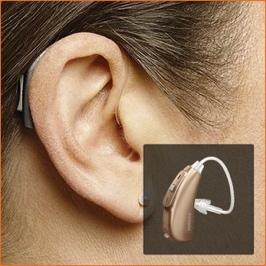
BTE
Behind-the-ear
A hearing aid worn behind the ear, connected to an earpiece by tubing.
Discuss this style →Explore styles and features, with independent advice about what suits you.
Your hearing assessment, listening goals, comfort and budget help guide the recommendation.
We’ll explain suitable options and the differences between models.
Learn about hearing tests →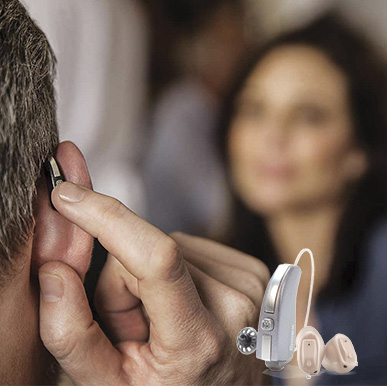
See three common styles, then talk with us about the options that suit your hearing and everyday life.
A hearing aid worn behind the ear, connected to an earpiece by tubing.
Discuss this style →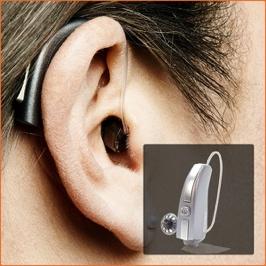
A small device behind the ear, with a thin wire leading to a receiver in the ear canal.
Discuss this style →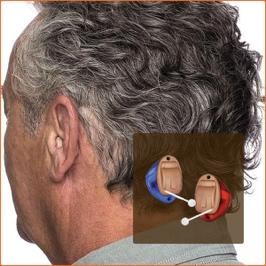
A small hearing aid that sits within the ear canal. Fit and available features vary.
Discuss this style →Images illustrate hearing-aid styles, rather than a current product offer. Appearance, features and suitability depend on the model and your assessment.
BTE models deliver sound through tubing and an earpiece. RIC models use a thin wire to a receiver in the canal. Hearing needs, fit and handling guide the choice.
Check durability and care →Explore custom and discreet styles. Size can affect the available battery, controls and connectivity. Some smaller devices do not offer Bluetooth streaming.
Explore controls →Convenient daily charging can reduce handling of small batteries. We compare charging routines, running time, cost and replaceable-battery alternatives.
Charging and funding explained →Bluetooth is common in many current models. Explore phone compatibility, Auracast, TV transmitters, apps and physical controls.
Explore connected listening →Annual reviews, appropriate adjustments, cleaning guidance and rehabilitation help you keep getting the most from your hearing aids.
Explore ongoing support →We offer a broad choice of hearing-aid styles and brands. Bluetooth is common in many current behind-the-ear (BTE) and receiver-in-canal (RIC) models, but it is not included in every device. Some small in-canal models and other devices do not support Bluetooth audio streaming. Your clinician checks the exact features rather than assuming a style or brand guarantees them.
Compatibility depends on the hearing-aid model, phone model, operating system and the feature you want to use. Direct calls, hands-free calling, music streaming and app controls can have different requirements. An app working on your phone does not automatically mean direct audio streaming or hands-free calls will work.
Only supported Android phone-and-hearing-aid combinations provide particular streaming features. Apple compatibility also needs checking. Bring your phone to your consultation; we can help check the current compatibility list and explain any accessory needed. A list of suitable devices is available from our team on request.
Check before buying a phone or accessory, and again after major software changes. We can help you pair the devices and demonstrate the functions available.
Auracast™ broadcast audio is a newer capability within Bluetooth LE Audio. Compatible hearing aids can receive sound from a television with an enabled Auracast broadcast transmitter, or an appropriate external transmitter. Depending on the hearing aid, a compatible phone, app or other assistant may be needed to select and join the broadcast.
A television having Bluetooth, Bluetooth Low Energy or even an LE Audio label does not by itself confirm that it can broadcast Auracast to your hearing aids. Both sides must support the required functions, with appropriate firmware and setup. Ask us for current compatible hearing-aid and TV options before you purchase.
Manufacturer TV transmitters provide another option. Many brands offer a TV accessory that connects to a suitable audio output on the television, such as optical or an analogue connection, and sends sound wirelessly to compatible hearing aids. The correct transmitter, cables and hearing-aid platform must be matched; accessories are not universally interchangeable.
We can discuss TV-listening options, check the equipment and demonstrate volume control so you can follow the television more comfortably.
Bluetooth SIG: how Auracast works ↗ · Example: Oticon TV Adapter ↗
Some non-Bluetooth hearing aids can still use a compatible physical remote or an app that sends high-frequency sound commands, sometimes described as an acoustic or ultrasonic remote. Where supported, these can adjust basic volume and listening programs; they do not add Bluetooth audio streaming.
Many hearing aids also have a push button or rocker switch. Your clinician can explain which controls are enabled and demonstrate how to change the volume or program. Buttons, remotes, app features and program options vary by model.
At your appointment we consider hand dexterity, vision, phone confidence and your preferences. A simple physical control may suit you better than an app, or you may prefer a combination. We practise the steps with you.
Example: Signia app support, including non-Bluetooth setup ↗
Many current BTE and RIC models carry an IP68 rating, but ratings and test conditions differ between products. IP68 indicates dust protection and water resistance under the manufacturer’s specified laboratory conditions. It is not a blanket promise that every hearing aid is suitable for swimming, showering, salt water or every type of moisture exposure.
Check the exact model’s rating, care instructions and warranty through the manufacturer links below, or ask us to confirm them. Follow the manufacturer’s drying and cleaning advice, including for rechargeable devices.
We often recommend rechargeable hearing aids for the convenience of daily charging and less handling of small disposable batteries. We also consider battery life between charges, time spent streaming, travel, access to power and how easily you can handle the charger. Replaceable-battery models remain a useful option for some people.
Rechargeability alone does not guarantee a longer device life or protection from moisture. Sealing, the model’s IP rating, maintenance, storage and everyday care all matter. Rechargeable batteries may eventually need professional replacement.
Our current fully subsidised hearing-aid options generally use replaceable batteries. In the range we currently offer, choosing a rechargeable model attracts an additional fee; your clinician will confirm the current models and provide a written quote, including any charger.
Hearing Services Program eligibility and clinical needs determine the funded options. An eligible client who needs hearing aids must be offered a suitable fully subsidised option. BTE, RIC, in-the-ear and in-canal styles can be discussed where clinically suitable and available under the relevant funding arrangements; no single style suits everyone.
Private clients pay for their hearing aids and services, subject to any applicable health-fund benefit or other funding. We explain the price, inclusions and available choices before you decide.
We strongly recommend an annual hearing and hearing-aid review, with a full evaluation and adjustments as appropriate to your needs. A review can check your hearing, speech understanding, device function, physical fit and whether your settings still meet your listening goals.
For eligible Hearing Services Program clients, a routine review may be fully subsidised when due under program rules. Pensioner status alone does not guarantee every visit is free. Maintenance arrangements and other services can have separate conditions or fees. Private reviews attract a fee, which our team confirms before booking.
Your hearing aids need ongoing care. We demonstrate the cleaning tools, wax guards, domes or earmould care relevant to your model, and can show suitable manufacturer videos. Do not use water, chemicals or tools beyond the instructions for your device. Tell us if there is pain, irritation, a blocked sound or a device that stops working rather than waiting for the annual review.
A sudden deterioration in hearing needs urgent medical assessment today. It should not wait for a routine adjustment or an email response.
 Visit Signia →
 Visit Starkey →
 Visit Widex →
 Visit Beltone →
 Visit Phonak →
 Visit Audeara →
 Visit Oticon →
 Visit Cochlear →
Tap a logo to visit the manufacturer’s official website. On mobile, use your browser’s Back button to return here. Availability varies by model. Audeara offers personal listening products. Cochlear specialises in implantable hearing solutions, which require specialist assessment.
We’ll help you understand the available pathways and discuss costs before you decide.
Eligible clients may receive subsidised hearing services and devices through the Australian Government Hearing Services Program.
Explore program information →Eligibility and program conditions apply. Ask our team to help you check your options.
Your extras policy may include benefits towards hearing aids or assessments. Benefits depend on your fund, level of cover and available limits.
Explore health fund options →Check your entitlement, waiting periods and any out-of-pocket costs with your health fund.

Interest-free purchase plans through Humm are available for up to 24 months on eligible products, for approved applicants. Different products have different repayment periods; the full 24-month term is not available on every product. Your audiologist will confirm the plan available for your selected devices.
Interest-free does not mean fee-free. Lending criteria, fees, charges and provider terms apply. Check the total amount payable and repayment schedule before accepting a plan.
Ask your clinic about using Afterpay for your purchase. Availability is subject to approval, your approved spending limit and applicable Afterpay terms and fees.
Afterpay terms →Financed purchases are charged at the recommended retail price (RRP). Discounted prices and promotional discounts are not available on financed products. Hearing aids purchased on a finance plan must be sold at RRP. Your audiologist will confirm the applicable price, available repayment period and payment details before you proceed.
Ask about Humm →Approval subject to credit assessment criteria. Fees, charges and interest, if applicable, vary by product, merchant and amount of credit. Review the loan schedule and terms before accepting.
Credit provided by Once Credit Pty Limited ABN 99 112 319 632, Australian Credit Licence 386194.
Humm fees & information ↗Contact your clinic to discuss pricing, funding eligibility and payment arrangements before you decide.
If conversations remain difficult despite well-fitted hearing aids, a cochlear implant assessment may be worth exploring. Australian Audiology can help you take the first step: we review your hearing, speech understanding and current hearing-aid benefit, explain the assessment pathway, and help coordinate referral to a specialist cochlear implant team or ENT when appropriate.
The specialist team determines suitability and discusses treatment choices, funding, surgery and ongoing rehabilitation. A referral is an opportunity to learn about your options; it does not commit you to an implant. Outcomes vary, and implants do not restore natural hearing.
Understand the possibilities.
Take the first step with support.
If both ears have aidable hearing loss, two hearing aids are often recommended. Your hearing results, speech understanding and goals guide the recommendation. We explain why a particular arrangement is appropriate for you.
Ask for an itemised quote showing the price per ear or per pair, fitting and aftercare inclusions, accessories and ongoing costs. Review our voluntary 30-day return conditions and applicable fitting fee before purchase.
Find daily care tips and a video resource for cleaning and maintenance.
Hearing-aid maintenance →Private hearing aids range from $1,500–$5,500 per device, plus $670 per fitting appointment for one or two devices. Eligible pensioner and DVA clients can access standard fully subsidised devices at $0.00, subject to eligibility and coverage. Optional top-up devices range from $1,000–$4,500 per device. An annual hearing aid review is $255 privately or fully subsidised for eligible clients when the service is covered.